

Gardening: My Perfect Stress Reliever
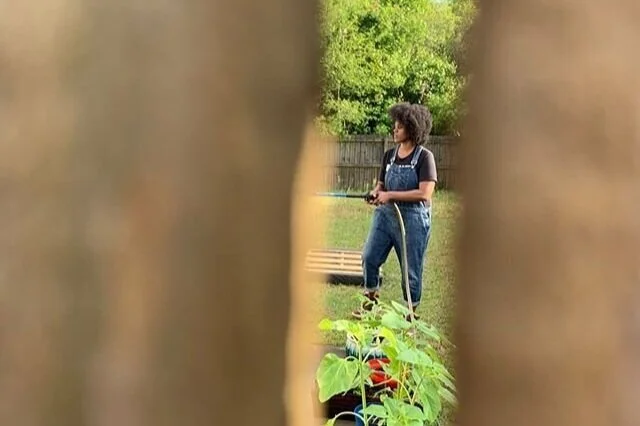
Gardening: My Feel Good Hobby
I was reintroduced to gardening in the Fall of 2016 when my eldest son, Tory, did a science project on hydroponics and aquaponics, he was in the fourth grade.
Of course, I had to drive him around to collect supplies and I knew nothing about hydroponics and aquaponics, so I learned a lot about gardening during this process. Always, wanting to be like their big brother, my younger two sons asked to start a garden as well. So, my younger sons and I started a gardening project parallel to Tory’s, but, the younger two kids’ gardening project became mostly mine and I loved it!.
This little gardening project started in 2016 and I was under an immense amount of stress. One might think that the added responsibility of taking care of seedlings added to that stress, but in fact, it did the opposite. For some reason, it brought me a sense of joy. What was up with that?
Gardening and Its Effects on Your Mental Well-Being
Recently, I've been more aware of how beneficial gardening has been for lifting my mood and calming me down when I'm feeling stressed or overwhelmed. I started to notice that anytime I was feeling tense, I'd begin taking myself out to the garden automatically to get some headspace. It would feel like I'd been out there all of ten minutes before one of my boys would come looking for me, and I'd realize an hour had gone by (Don't worry, their father was with them). I started to do some research. I wanted to know if it was just me who was finding the ritual of getting on my hands and knees digging into the soil therapeutic, or if stress gardening was "a whole thing."
Maybe I'd discovered something incredible I could share with the world!
Okay, so turns out, it is a whole thing known as horticultural therapy. In fact, as I dug deeper, (some gardening humor), I discovered a number of studies have been carried out all over the world that suggest that gardening is one of the top stress-relieving leisure activities, with study groups seeing better stress-relieving results from gardening compared to reading. The studies showed that the overall mood was elevated and fully restored in gardening groups, and cortisol (stress hormone) levels were significantly reduced. So, I may not have discovered a new amazing method of stress relief, but it was nice to see I was amongst friends.
WHY GARDENING CAN RELIEVE STRESS—VITAMIN D
Gardening is a great way to get some Vitamin D into my system. In the sun, talking to my plants, part of the mood enhancement, is thanks to soaking up some of that beautiful sun rays. Even on a cloudy day, the sun is still there, nourishing my body with Vitamin D. Of course, I'm always (well almost always) careful to wear sunscreen or a hat if needed. And the same goes for the kids when they join me to help, learn, or dig for worms.
A SENSE OF PURPOSE
I have three beautiful boys whom I adore, so I didn't think taking care of plants and flowers could be as rewarding as raising my kids, but gardening actually has its own sense of purpose. Yes, I have to take care of my family and help my boys grow up responsibly and healthily, but as they get older, they become more independent, and the way in which they need me changes.
So, when I started to see the results of my efforts in the garden, it reaffirmed something in me:
My need to nurture, nourish, and care for a living thing and help it grow into something truly beautiful.
But, plot twist…
My research said that feeling is actually oxytocin.
What???
Yes, Oxytocin. The hormone that helps bond a mother and her child.
So yes, I guess I do need to nurture something or someone, the release of that hormone is rewarding. According to my research, gardening and caring for plants and animals stimulates the release of oxytocin. During my research, I kept seeing oxytocin being referred to as the “love hormone,” interesting.
ENHANCES YOUR SENSES
I've always loved the smell of flowers, but I'd never fully realized how much I loved the smell of dirt. That's to say, the smell of fresh soil I've just turned over with my garden trowel. There's something so calming when that scent hits my nostrils, and I feel close to the earth; that gives me life! The bursts of color and scents that now make up my garden truly delight me every time I step outside. Even after rainfall, the smell of a damp garden has a strangely calming effect knowing that the water is making it stronger and more magnificent for the next sunny day. The simple smell and sound of my garden with the rustling leaves, birds in the trees, and the feel of the soil under my feet stimulate my cognitive senses and it is just the tonic for reducing my anxieties.
BOOST YOUR ENDORPHINS
If you don't know what an endorphins is, endorphins are a chemical produced by our bodies that reduce overall feeling of pain and stress.

A lot of people feel it after a tough workout in the gym, but my gym is my garden. Let's be clear, gardening is no joke. It's physical, it's messy, and it can scratch you up something crazy if you get into a fight with a rose bush. So, it stands to reason that when you're done you've got your heart rate going, the blood is coursing through your veins, and those feel-good endorphins are pumping out of your brain and around your body.
MOTIVATIONAL
Gardening can promote a sense of motivation because it needs regular upkeep to ensure the garden doesn't die or get overgrown. I'm always planning new features for my garden or planting new things. It may seem simple, but having a garden is a motivator because it gives me a reason to get up and go outside instead of sluggishly sitting on the couch watching TV when I get an hour to myself. When I find myself with a free afternoon, I'm itching to get out in the garden and check in on everything to make sure it's doing okay. Seeing it flourish gives me an amazing boost of self-esteem. And I love a trip to the garden center. That's my "me time".
As I read more about gardening and our neurotransmitters/hormones (I keep seeing these terms being used interchangeably to refer to oxytocin, serotonin, endorphin, and dopamine). I realized that my motivation to maintain my garden was likely triggering dopamine, the other happy hormone.
HORMONE STABILIZER
As mentioned at the beginning of this post, our body releases hormones that control how we feel and send signals to our brain. Dopamine is the "happy hormone" that's released when we experience pleasure. Dopamine levels are raised when gardening, which creates a sense of happiness and motivation.
The other hormone is serotonin, which is responsible for balancing and regulating our mood as well as a number of other things such as appetite and sleep. When we garden, these hormones are released, and the studies suggest that gardening promotes a high release of these hormones, giving gardeners greater overall satisfaction and a sense of calm.
When these hormones are released, they combat cortisol, the stress hormone, meaning that in a world full of electronic devices, 24-hour news, and demanding schedules, our cortisol levels are through the roof.
According to researchers, we feel worthwhile when we see the results of our hard work which enhances dopamine levels. I certainly discovered this to be the case when I started gardening.
Recap
Essentially, modern life is stressful, and we can become buried in our own anxieties and start to exist on a fast-paced, high-functioning, hyper-competitive level that isn't good for anyone.
Taking up gardening has been my key to finding an outlet for my stress and it's been a healthy way for me to keep my mood in check while also creating something that my whole family can enjoy, which brings me even more satisfaction.
I set out to learn if there were any intense scientific studies being done about gardening and mental health because I had seen such an improvement in my own stress and depression since I began gardening. Not only did I learn that there are several studies out there, but it seems gardening is beneficial in multi-faceted, layered ways. Yes, the physical act of gardening releases or activates neurotransmitters that promote happiness by triggering our reward responses(dopamine), need to love and nurture (oxytocin), get moving (endorphin), and find our own sense of peace (serotonin); but several sources cited that handling soil, the actual act of interacting with bacteria found in soil may activate brain cells that produce the feel-good chemical serotonin.
Further Reading
Want to read more about what scientists are studying as it related to soil and stress? Sure you do. Check out this article where the work of Dr. Christopher A. Lowry is discussed, key takeaway, the possibility of formulating a stress vaccine composed of bacteria naturally found in soil.
Related, check out this article that discusses soil microbes and human health.
If you want to look at some of the studies here are a couple:
Preventative Medicine Report : Gardening is beneficial for health: A meta-analysis
Oxford Academic : A case–control study of the health and well-being benefits of allotment gardening
International Society for Horticultural Science (ISHS), Leuven, Belgium : The Neurobiology of People-Plant Relationships: An Evolutionary Brain Inquiry
